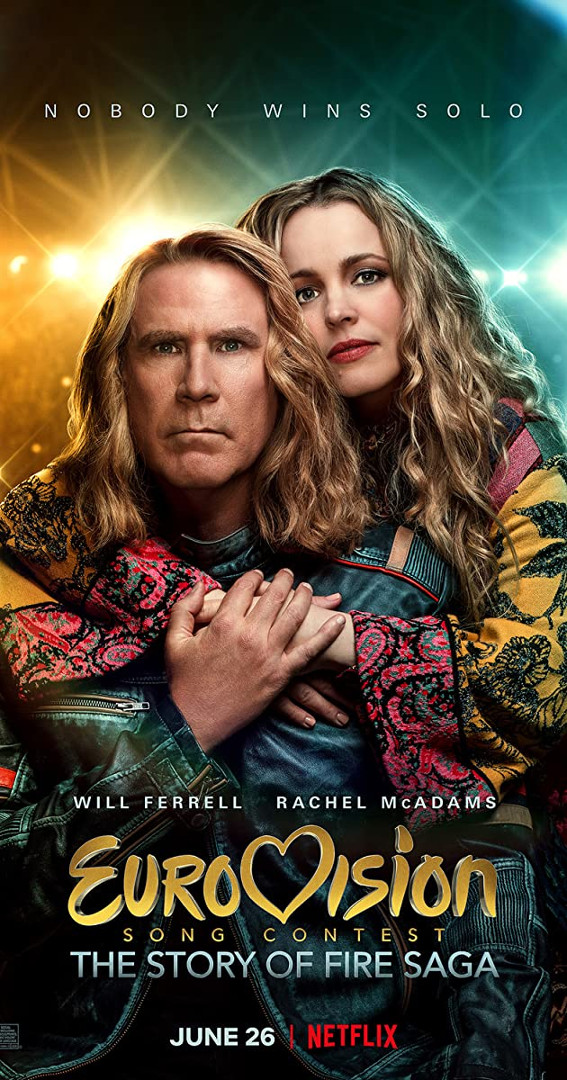
Eurovision Song Contest: The Story of Fire Saga

Eurovision Song Contest: The Story of Fire Saga (which I will be referring to as Eurovision Movie from now on) is a Musical Comedy about an unknown Icelandic Band (the titular Fire Saga), their dream to win the Eurovision Song Contest, and the problems (both on and off-stage) they face along the way. The story follows the two-person band from their humble beginnings in a small town in Iceland to… well, telling you that would be a spoiler!

The plot follows a fairly predictable outline, but the ways it hits these predictable milestones is usually quite unpredictable. What the film lacks in overall substance it more than makes up for in the scene-to-scene interactions. The overarching plot is more of a formality needed to tie the film together, and the way the movie moves between these plot points is the real selling point of the film.

The film markets itself as a Musical Comedy, and whilst it is a Musical – and inevitably has a lot of songs in it since it’s about a Song Contest – the comedy is what drew me to Eurovision Movie. And on the whole, the comedy delivers. There are definitely moments which could come across as forced or contrived, but the way the film sets up the characters makes these moments believable. The film doesn’t take the shotgun approach (throw every joke at the wall and hope some of them stick) of some of Will Ferrell’s earlier works, but instead takes a more precision approach to place the (sometimes juvenile) humour Ferrell is known for in just the right places.

The acting in the film is pretty on point. Most of the characters aren’t too complicated, but have the right amount of depth for the role they play. Will Ferrell still mostly plays Will Ferrell, but ties his style into his character and (apart from showing his age) doesn’t feel out of place. Rachel McAdams (the other member of Fire Saga) really sells her part, and (as a casual critic) I could not fault her. The rest of the supporting cast do an excellent job selling the world without overshadowing anyone. The camera maybe lingers on Pierce Brosnan a little too long sometimes, but his stoic (almost lack of) acting keeps these moments grounded. The accents sometimes take a bit of a wander, but as I’m not an expert on the Icelandic accent, they were good enough for me.

The cinematography is pretty good – though (as usual) not something I thought about much while watching. The choreography of the musical pieces was dynamic and exciting, making most of the songs feel like they were building to a real Eurovision (though I must admit I’ve never paid much attention to the real Eurovision). This was aided by the choice to use real Eurovision artists for the competition establishing scenes, and is quite amusing once you pick up on it.

There were a few times you could tell the camera was framed such that actors could record their lines separately, or so scenes could be stitched together from multiple takes, but it was never immersion breaking. The musical queues were also pretty good, there was only one song I would call “unnecessary” in the traditional Musical style; but being the only one I assume it was mostly a riff on traditional Musicals. While I don’t remember the musical queues, the story flowed into the musical scenes well. Overall, the cinematography is fairly generic for the “normal” scenes, but puts in the work during the musical scenes.

There are quite a few chronological inconsistencies with the film, but these are usually in aid of jokes and not critical to the plot. Though apparently the Contest being held in Edinburgh completely messes with the timeline of the film, but the setting is not plot critical and is a mistake I will readily forgive of Comedy movies.

Eurovision Movie is a really good Comedy film, and not a bad Musical film either. My Dad dislikes Will Ferrell and even that couldn’t stop him from laughing out loud at much of this film. Heck, my Dad and I both dislike Musicals, but the Musical pieces worked really well. There’s even a song we’re still humming the words to (though admittedly for its Comedic value). I would definitely recommend Eurovision Movie to anyone looking for a fun film that doesn’t take itself too seriously.

  • Cinematography – 6/10
  • Plot – 6/10
  • Acting – 8/10
  • Script – 9/10
  • Enjoyment* – 9/10

OVERALL – 7.6/10

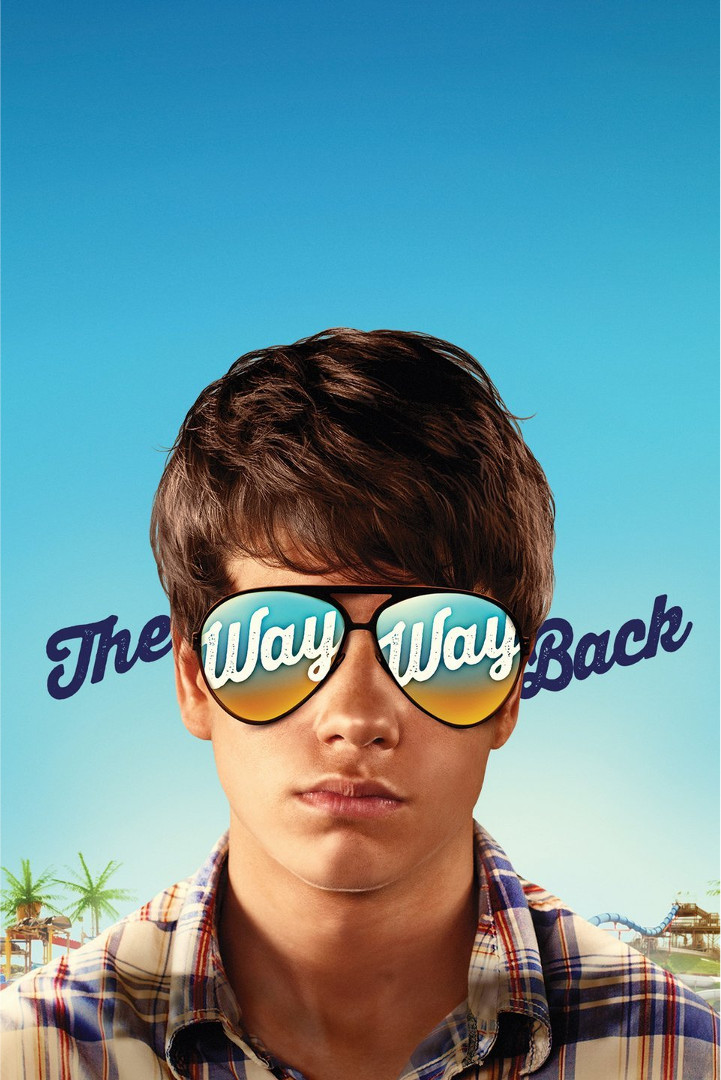
The Way, Way Back – A.K.A. Every Coming-of-Age Film Ever

The Way, Way Back is a coming-of-age drama which follows a veritable “loser” kid, Duncan (played by Liam James), and his somewhat-dysfunctional family on their Summer vacation to Cape Cod. While there, they meet some similarly dysfunctional families (mostly bad parents), a “cool” dude who pays way more attention to the “loser” kid than he should, and a water park which raises more questions than it should.

This film is also tagged as Comedy for some reason, but other than the handful of jokes you would expect in almost any film, I don’t believe it did anything to deserve that tag.

The stand-out aspect of this film is the writing, but not for the right reasons. A debut piece for the writer/director duo, (and not a duo I intend to follow) who I can only assume watched every coming-of-age film they could ahead of writing The Way, Way Back and made the decision to write exactly the same thing again. Now, “coming-of-age” is far from my preferred genre, and this film reminded me exactly why that is the case; many scenes felt horribly cliché and the plot was incredibly predictable. It’s almost refreshing that the film leaves most of its major plot points unresolved, but in hindsight that was worse than the few plot points it did resolve in an incredibly predictable manner. Either things work out for characters despite minimal effort on their part, or things are left unresolved in a cliff-hanger-like way – which might be exciting if you were more invested in the film, but I was left frustrated by.

Some elements are well done within the script, the “cool” character (Owen, played by Sam Rockwell) is done fairly well. Whilst the “growth” the character goes through is a little rushed and a little forced, his personality is set-up efficiently and stays consistent with audience expectations throughout.

Almost every significant character is flawed in some way, though often these flaws define the character so wholly that it becomes difficult to understand their situation. For example, Duncan’s mother (played by Toni Collette) shows little to no regard for her son’s wellbeing, often not caring that she has no idea where he is for an entire day, and one full night too at one point. This makes it extremely difficult to be sympathetic to her plight during one of the climactic twists of the film.

Because the writing comes across as so generic (I don’t want to call it terrible, just terribly boring) it’s difficult to evaluate a lot of the other points of the film. The acting was probably pretty good in general. Steve Carell (as Trent, Duncan’s mom’s new boyfriend) does a good job at playing “the bad guy” of the film and comes across as a very believable bully who pretends to care. Sam Rockwell gives a solid and consistent performance, being very believable even during emotionally contrasting moments for his character. Carell and Rockwell are two of the highlights in this film, which is almost a shame as two of the biggest names in the cast, but that’s how you become a big name.

The teenage performances are masked by the cliché writing. Though they might be accurate to how teenagers act, the stereotypical journeys that they go through caused me to lose interest in their characters and makes it difficult for me to evaluate their performances.

The cinematography in this film is mostly fine, but the most memorable moments are ones of poor cinematography. The amount of times Duncan hides in direct eyeshot of another character is bewildering, but even more bewildering is the choice to have the climatic finale of the film (which is incredibly poorly set up) inside a water slide. We don’t see the inside of the water slide, the camera “follows” the action inside the opaque waterslide from outside the waterslide. There’s not even any dialogue or sound effects, it’s just music played over a camera following the path of a waterslide. In context it’s pretty nonsensical, so I can only imagine what anyone reading this is picturing. I’m also bewildered by their choice of finale, it’s an event which is mentioned approximately twice throughout the film, and is used to set up a joke both those times anyway. It’s not a major plot element, it’s not something which needed to be resolved, it feels like a throwaway “running gag” which was made into the finale due to a lack of any better ideas.

The other bit of cinematography which stood out to me is Duncan’s transition from an incredibly pale “loser” kid, to a well-tanned kid with confidence. Whilst the transition from pale to tanned would be a nice way of symbolising his journey, you’d think that this would be done gradually over the film’s length. I can only assume they didn’t have the budget for more than 2 skin tones, so Duncan goes from completely pale to perfect tan in one scene. This also raises the issue that any indoors kid who is as pale as Duncan starts would absolutely go bright pink as they burned immediately from any contact with direct sunlight (there is never any mention of sunscreen); not turn a beautiful golden colour overnight.

Actually, I’m not sure how long that change takes, there is no sense of time in the film. It appears to go a day at a time, (with time skips during the day but not explicitly skipping whole days) but near the end of the film we see Duncan has won Employee of the Month – which suggests they have been there for over a month as he didn’t get he job on the first day they arrived. Having looked up American vacations, summer break is approximately 3 months long. So whilst this is entirely possible it does raise the question about what his mom and her boyfriend do for a living, as apparently they’re both able to take over a month off work – they don’t even mention “work” at any point during the film.

I’m impressed at the amount of questions The Way, Way Back manages to raise considering its cookie-cutter approach to the coming-of-age genre, and I’m shocked it rates as highly as it does. The few snippets from reviewers I have read seem to have watched a different film to me as they praise its lack of clichés, whilst I cannot remember a more clichéd film. If “coming-of-age” is your favourite genre, The Way, Way Back is probably a good way to spend 2 hours; but if, like me, you’re more interested in the Comedy/Drama side of it, then you can do so much better than this film.

  • Cinematography – 4/10
  • Plot – 2/10
  • Acting – 5/10
  • Script – 3/10
  • Enjoyment* – 2/10

OVERALL – 3.2/10

Outer Wilds

Having released on Steam about 2 weeks ago – and picking it up myself during the release sale – I completed Outer Wilds last night and now set about the difficult task of reviewing a discovery driven game without giving away any spoilers.

Outer Wilds is a space exploration/adventure/story game, with puzzle-like elements. It is heavily narrative driven with no “combat mechanics” and relatively little skill required to play. You need some basic sense of co-ordination and a willingness to work things out for yourself, but it is otherwise quite straightforward.

In Outer Wilds, you play as an unnamed alien who is about to be sent into space for the first time. You are given a few hints as to places you could go, but no actual information about what to do, and the game thrives on this style of open-world gameplay. It is totally up to you where you go, what you do, and what you find out. The game gives you certain prompts and helps you piece information together as you go, but the actual goal of the game isn’t clear straight away.

One of the most ingenious things about Outer Wilds is that it is theoretically possible to complete the game straight away, but you would have to go to certain places and do certain things in a way that is incredibly unlikely for any player to ever do (without prior knowledge). Though players will likely discover the game in a different order to any other player, the game is designed in such a way that you will likely need all the information possible before you know enough to actually “finish” the game. This is an absolute masterclass in game design, and anyone looking to make a single-player exploration experience should take notes.

The controls feel a little clunky at first, but this goes away within a couple of hours of playing. The reason for this clunky-ness is because the game gives you access to everything without the need for a menu; which allows you to continue playing without interruption from any sort of item switching or inventory management (a pitfall into which many games have fallen). Once you’re used to them the controls are pretty simple and intuitive, and the trade-off between learning time and not needing an inventory system is well worth it.

The game design is… well beautiful. I don’t usually put much stock in a game’s graphics – as long as they feel appropriate for the game and aren’t difficult to understand – but Outer Wilds really excels in this department and I was fully immersed in the game after a couple of runs. Outer Wilds doesn’t go out of its way to look hyper-realistic, but it is still a beautiful place to be and just observe sometimes. Several times I found myself spending several minutes simply looking around without gathering any specific information (by the nature of the game, I did learn some things this way, but it was usually ideas about where to go next rather than anything specific) and just enjoying the scene.

On a related note, the music in this game is phenomenal. Outer Wilds manages to give a constant creepy vibe without ever putting the player in any danger, mostly thanks to its music. I had to frequently remind myself that I wasn’t in any danger personally, though the atmosphere the game creates sucked me in every time. Even after finishing the game I still get the same rush from thinking about certain locations within the game. This is a true coming together of visual, audio, and narrative queues to keep the player on-edge, at the tipping point of hopelessly excited and completely terrified. There is one music track which plays whenever a certain event is about to occur, and I have never had such an adrenaline rush from such a calming piece of music.

I don’t want to explain too much of the story – as the entire game is about the discovery of that story – but I will say that as I was reaching the game’s conclusion I was wondering what conclusion could possibly live up to the mystery that had been unfolding throughout the game; and Outer Wilds delivered a wholesomely macabre scene which felt incredibly fitting for the range of emotions it had taken me through. For all the praise I have already given this game, the storytelling is still its absolute best element.

Many of my friends considered this to be their Game of the Year 2019 (its initial release), and now I understand why, and I wholeheartedly agree. Full price is £20, and for the fantastic 20 hours I got from it (and I expect to spend a few more in it to make sure I’ve seen everything), I think it is well worth that price.

  • Gameplay – 10/10
  • Mechanics –8/10
  • Story – 10/10
  • Price – 9/10
  • Enjoyment* – 10/10

OVERALL – 9.4/10

*Enjoyment is a personal measure of how much I enjoyed the game, more of a “gut feeling” than the empirical approach I try to take with the other ratings.

Uncut Gems

Uncut Gems is a film about a jeweller undergoing major issues in just about every facet of his life (marital, family, business, financial, relationship, and gambling to name the major plot points) and his journey through these problems as he tries to balance them all at once, and come out on top in each of them.

The narrative is driven by its anxiety inducing pacing, focussed around the fast-talking main character (aforementioned jeweller, played by Adam Sandler) with the plot matching (and sometimes outpacing) the speed of the character. Whilst this is overwhelming and slightly confusing at first, it blends into the storytelling and helps to maintain the high-intensity action which is near-constant throughout the film. Important elements get introduced in a blasé way as if this is “just another day” for the character, and as the film progresses the audience is able to piece together the complex relationships present throughout. Several, seemingly key, plot elements get introduced late into the film and add to the complexity of the narrative without confusing the audience, in a unique method of storytelling which changes nothing for the characters but heightens the stakes for the audience.

The film has to be fast-paced to elicit the stress from the audience which most rational people would experience in similar situations. This allows for a detachment from the main character as the audience comes to terms with, though this is a single-character driven story, they are not the “good guy” in this tale. That realisation leads to an internal struggle that whilst the character is trying to “win” at everything, that would be an unsatisfying conclusion to the film. As I was watching Uncut Gems I had to debate what scenario could possibly occur to feel like a satisfying conclusion – most characters I wanted to neither win nor lose, and the few I did want to win/lose seemed to be tied to other characters that I didn’t want to share that win/loss. I am very pleased to say that Uncut Gems managed to find a way to conclude just about every plot point in a satisfying way.

Adam Sandler does a surprisingly good job at playing a serious character. As someone who is fairly ubiquitous with silly and poorly-rated films, Uncut Gems deserves the praise it has received. Sandler’s character is wholly believable, and whilst I wouldn’t want to befriend such an individual, they feel entirely real. Sandler portrays a broad range of emotions during Uncut Gems, executes them well, and stays true to the character throughout. The supporting cast doesn’t have any standout names or moments, but they do a good job, make the world very realistic, and didn’t break my immersion at any point; solid acting across the board.

The cinematography isn’t anything unique, but there’s nothing wrong with it either. Sometimes it is a little difficult to get a sense of the space, but I think that’s somewhat deliberate; the fast-pacing of the film makes it feel very “busy”, and framing shots to appear crowded and/or cramped adds to that busyness by pressuring the audience to try and take it all in and make sense of it, amplifying the stress-driven narrative. As is typical for me, I don’t remember much about the musical queues, but as I say, if I don’t notice them that’s probably a good thing.

Uncut Gems is a dark-drama kind of film, and you do need to be in a technical and focussed mindset to really get the most out of it – if you’re looking for an easy watch at the end of the day there are plenty of other films I can recommend. Uncut Gems is definitely worth a watch, if anything just to prove that Adam Sandler can actually act. Don’t be put off by the confusing nature of the film early on, whilst it doesn’t slow down it does become easier to parse; and if you can handle the anxiety-inducing pacing, it’s a very interesting watch.

  • Cinematography – 7/10
  • Plot – 8/10
  • Acting – 9/10
  • Script – 9/10
  • Enjoyment* – 8/10

OVERALL – 8.2/10

*Enjoyment is a personal measure of how much I enjoyed the film, more of a “gut feeling” than the empirical approach I try to take with the other ratings.

Whiplash

This is a review I wrote a couple of months ago but never got round to completing. I’ve given it a quick check and am posting it to prevent creating a backlog for myself. Apologies if it is not up to my usual standard.

Whiplash is a film centred around a young talented drummer (Miles Teller) and his elite conductor (J. K. Simmons) with unusual teaching methods. The film takes place almost entirely within rehearsal rooms and musical venues emphasising the strong musical theme of the film, with most of the action centred around the two main characters. Even the scenes outside the musical setting still advance the musical storyline in some way.

The plot of the film is captivating enough to watch but didn’t feel like the focus of Whiplash. The difficulties faced by the main character are all ultimately the same thing, him being too desperate to be the best drummer that he fails to live his life. The struggles he faces with the conductor to become a better drummer, though they create some powerful scenes, don’t actually drive the plot in any way. The plot concludes in a very unsatisfying way, where you feel as if it’s building up to something (and it is) but the film ends without giving the audience any closure. On the one hand, Whiplash feels like it’s meant to be a bittersweet “nobody wins” sort of ending, but it’s also clearly setting up for something (not a sequel) that – for some reason – it doesn’t want to tell the audience. There are a handful of conclusions you could draw, but letting the audience decide for themselves did not feel like a suitable ending to this film.

There are a couple of odd side-plots with one brief family scene and a half-arsed romance plotline. These are both used to show that the main character is forgetting other aspects of his life in order to pursue drumming, and whilst they are effective at doing so they feel somewhat out of place as we’re introduced to half a dozen characters who never appear again, almost justifying the main character’s ignoring them. Whilst these are sort-of resolved in a suitable way, they do feel more like an afterthought in the film.

The film is driven by the powerful scenes between Teller and Simmons with the complicated (and somewhat distressing) student/teacher dynamic being the main focus of Whiplash. Whilst Simmons puts in an excellent performance, his character is somewhat nonsensical and the only real justification for this is that he’s a psychopath. Perhaps that is the only logical explanation for the character, but it also feels like nothing they do has any lasting impact because of it – certainly not on the audience at least. Teller’s character doesn’t have much breadth of emotion, and whilst it seems like they were deliberately written as a melancholy character it never feels like Teller quite does justice to the two emotions he does show.

The cinematography is very musically driven (as you would expect in a film about drumming), and whilst it is on the whole well thought through, it didn’t really enhance my experience in any way. There are a lot of good musical queues (usually drums) but it only works because it’s a film about drumming. By which I mean, though these queues are good, they have to be because the film would make less sense without them. I don’t feel most of these enhanced my experience in any way so much as they served as a constant reminder that Whiplash has drums in it. The camera work was reasonable, there are some nicely done shots, but there are also jumpy shots at the camera cuts from instrument to instrument… because what else would they do whilst the band is playing? Occasionally there are continuous “one-take” shots, but these almost always linger on an odd part of the scene for a few seconds, providing an obvious place to splice two takes together. The artistic shots feel like they’re just there to be artsy and not serve a purpose, they look/sound cool but they don’t show the audience anything new or interesting in Whiplash.

But the most baffling part of Whiplash is why anyone would stay in a band with an emotionally abusive psychopath as their conductor / teacher. A choice which the main character makes several times, and based on the script, so have dozens of other students and professionals. He has no real leverage over these people other than the self-indulgent idea that he is “pushing them to become the best” – the closest I’ve come to that much pressure is when I chose to quit my job. Actually, the most baffling part is why the main character goes through with the last 20 minutes of the film, but it would be a spoiler to say any more.

Whiplash has some very powerful ideas in it, which unfortunately fall down upon closer inspection. I spent a lot of this film feeling awkward and confused, and though I could appreciate the powerful moments within the film, these weren’t enough to make me feel like I had spent my time well. The film does best when it strips away the stakes and plot and just focuses on a student who wants to be the best and his teacher who thinks if he is going to be the best then he should already be the best. I can sort of see why this movie rates highly amongst critics, but I am surprised it rates highly amongst audiences too; this feels like a film made for critics, not for the public.

This is not a feelgood film, and you should definitely be more mentally prepared to watch Whiplash than I was when I watched it. I would only really recommend Whiplash if you enjoy taking a more critical eye to movies, or if you are a huge J. K. Simmons fan, because his performance is probably the best thing about this film.

  • Cinematography – 6/10
  • Plot – 2/10
  • Acting – 6/10
  • Script – 7/10
  • Enjoyment* – 4/10

OVERALL – 5.0/10

*Enjoyment is a personal measure of how much I enjoyed the film, more of a “gut feeling” than the empirical approach I try to take with the other ratings.

Green Book

This is a review I wrote a couple of months ago but never got round to completing. I’ve given it a quick check and am posting it to prevent creating a backlog for myself. Apologies if it is not up to my usual standard.

Green Book tells the story of a world-class African-American pianist (Dr Don Shirley) going on tour to the Deep South (USA) and the Italian-American bouncer (Tony Vallelonga – a.k.a. Tony Lip) he hires to be his driver/chaperone. Set in the early 1960s, the film tackles the themes of racism and segregation using relative “role-reversal” for the time (the high-class pianist being black and employing a white person). The titular Green Book is a travel book for African-Americans travelling to the Southern states which provides information on safe places to stay and visit for coloured people. The film is based on a true story, real people, and a real guidebook.

The film sets up the two main characters in direct contrast to one another; one being a skilled and sophisticated member of high society, and the other being a working-class bruiser who does what they must to pay the bills. The film goes even further by showing the pianist to be very isolated and alone, only ever showing him talking to his employees during the setup of the film; whilst the bouncer has several scenes with close and extended family, and is even shown to be friendly with several community figures around town (e.g. shopkeepers). At one point our Italian bouncer is even shown to be a bit racist himself. All this is obviously set up to make the eventual coming together of the characters more meaningful and potentially bolster the anti-racism message as the driving force behind the film.

The plot is neatly contained by clearly setting out a 2 month tour the characters are embarking on, and by taking place in a different area of the country entirely makes it easy to avoid plot-holes as the film only needs to follow the journey of the two main characters. Though the story is somewhat predictable given the premise, with increasing challenges gradually bringing the two characters together, Green Book feels like it earns the emotion which comes with this (somewhat overdone) trope. The serious context of the film adds weight to the challenges faced by the main characters which makes the developing friendship between them feel all the more important. As the characters begin to see things from the others perspective, the moments of understanding they share feel so much warmer because of the uncomfortable setting of the film. The uncomfortable context further assists the “unlikely friendship” trope by making these moments more important without making them unbelievable or excessive.

The acting in Green Book felt really on point. It’s somewhat strange mix of using stereotypes whilst also subverting them makes the characters feel genuine but doesn’t take too much time to do so. Buying into stereotype allows the audience to understand a character quickly whilst the film shows the audience the subversions of the stereotype to make the characters three-dimensional. The two main actors (Viggo Mortensen as the bouncer Tony Lip, and Mahershala Ali as the pianist Dr Don Shirley) really carry this film, and boy do they need to given they are on screen for almost the entire time. They are consistent in their delivery and mannerisms, and the moments when the characters “break” or change in some way flows with the context and feels earned by the story. The rest of the cast effectively develop scenes and provide meaning to the actions of the main two without overstepping their mark or trying to shift the spotlight. There are very few moments in the film which feel out of place, which is a testimony to both the actors and the writers.

I was particularly impressed with the small parts played by club owners of the Southern states as they treat the polite and pleasant pianist as simultaneously a guest of honour and a second-class citizen, without seeing any fault in their actions. These small parts are really well done and perfectly exemplify the issues the movie is addressing.

The comedy within the film is really well done as it doesn’t detract from the serious message behind the film. The comedic moments which use race directly are only ever between the main two characters and are used as a plot device to show Tony’s character development. These comedic moments are particularly well written because they are only funny to the audience; by which I mean the characters are taking the situation seriously (even if light-heartedly) but they are clearly meant to be funny moments to help digest the heavy background of the film. Similarly, the writing of this film is generally well done, every action and line makes sense in context and even the moments which appear convenient or out-of-place serve some purpose or have been set up previously. Any time I thought I had spotted something strange something else would happen in the same scene to make it make sense again.

Briefly on cinematography, Green Book made good use of its cinematography. While it doesn’t do anything particularly unique, it makes good use of the camera shots and zooms to reveal information or portray scenes in certain ways. Though there were a few “artsy” shots it never felt pretentious, though I’m sure a film student could write an essay on the use of shadow in some scenes. Audio queues were used really well, there are a few obvious moments where the music is used to portray the mood of a scene, and even a couple of times the music provides the comedy. As a film about a pianist, it makes sense for music to play a key role in significant moments but it always feels like the music is adding to the action and never taking over it. This is one of the first times I can say I noticed the audio queues and they were used excellently.

I thoroughly enjoyed Green Book and would certainly recommend it to anyone looking for a character-driven drama. Though the setting of the film can be a somewhat touchy subject, I felt the theme was handled in a respectful but realistic manner – though admittedly I have not experienced anything similar myself.

  • Cinematography – 9/10
  • Plot – 8/10
  • Acting – 9/10
  • Script – 9/10
  • Enjoyment* – 9/10

OVERALL – 8.8/10

*Enjoyment is a personal measure of how much I enjoyed the film, more of a “gut feeling” than the empirical approach I try to take with the other ratings.

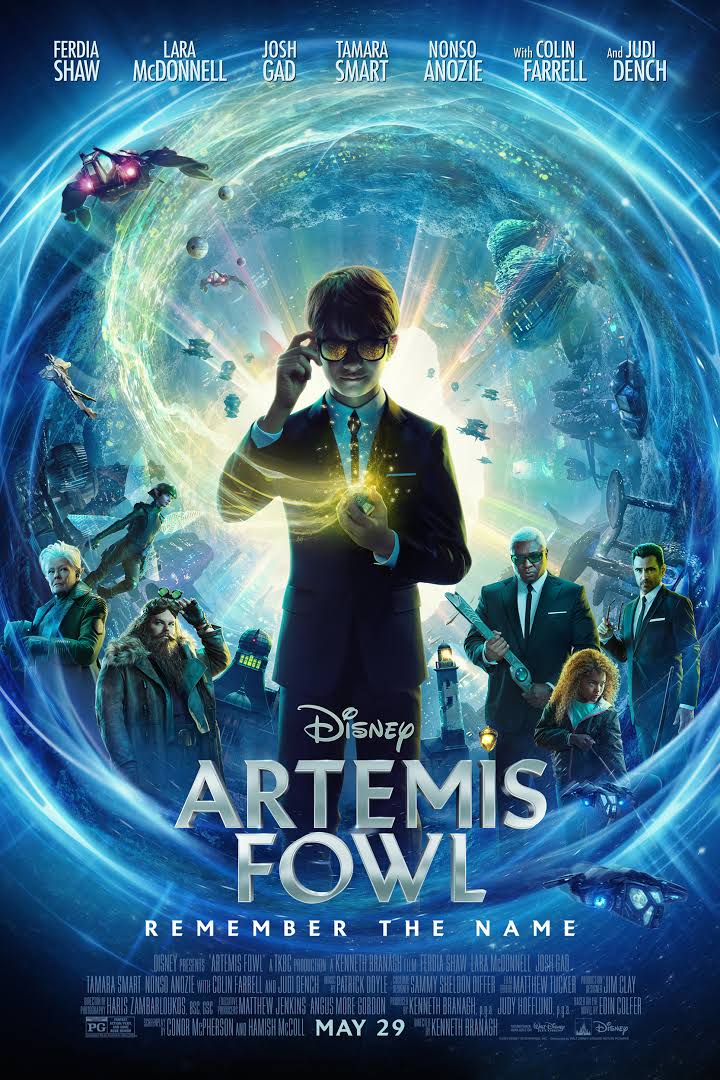
Artemis Fowl – The film with no target audience

Artemis Fowl was released direct to Disney+ on Friday, and thanks to my parents I was able to watch it with them on Saturday. The film is based on the book series of the same name, though the story seems to mash together several of the books in a way that both keeps it open for a sequel and also uses up most of the content that could’ve been in said sequel.

In the film, Artemis Fowl Sr. is kidnapped by un unknown source alluded to be a fairy, and tasks his son, (and main protagonist) Artemis Fowl Jr, with obtaining a powerful fairy artifact in exchange for his father’s life. We are then told that this artifact of immense power (and the one of the most important devices in fairy lore) has been missing for… a while, and the entire fairy military is looking for it around the clock. And then for some reason they send that entire military to deal with one 14-year-old holding a single fairy hostage.

The plot for this film is almost nonsensical, even if you have read the books. Many decisions and character moments in the film aren’t so much forced as they are illogical. Several items which take 2 or 3 books to setup are often completed within one short conversation, adding to a significant feeling of “tell, don’t show” within Artemis Fowl (which, if you know anything about storytelling, is the opposite of what is usually recommended). Most of the first 30 minutes is narrated, meaning that we’re told much of the setup of the film – and then given a brief bit of action to prove it – rather than shown examples of character traits and relationships. For example, in the first 5 minutes we’re told Artemis Fowl Jr. is a child genius, and given a brief example of him pointing out a “family heirloom” of a throwaway character is fake. The rest of the film expects you to believe he’s a genius, although many of his decisions to take on the fairy army are effectively “we’ll surprise them” and only work because the plot says so and the fairy army is (apparently) completely incompetent.

As a result of it’s “tell, don’t show” approach, the film feels incredibly rushed and still manages to get almost nothing done during its 2-hour run time. The film takes seconds to introduce the main characters, meaning you just have to take the narrators word for pretty much everything, and yet still has the time to have these obnoxious action scenes which don’t improve the audiences understanding beyond “oh, the fairies have good technology” which we’ve already been told multiple times! Speaking of action scenes, the few fight scenes which do happen in Artemis Fowl are atrocious. The camera jumps around constantly ensuring the audience have almost no idea what’s going on, making it feel like nobody ever really “gets hit”, and making many of the characters feel like an utter joke. Artemis Fowl Jr. is not a fighter, so having totally chaotic fights as part of his “genius plan” – plus the fact he beats several TOP MILITARY FAIRYS in hand-to-hand combat in one scene – completely undermines the point of his character, and makes the fairies seem utterly useless.

But the script is probably the worst thing about the entire film. Every other line in Artemis Fowl has been lifted from the “big book of film clichés” giving it this weird 90s parody film vibe in stark contrast to the setting. The script is incredibly generic, almost every line in this film (if you remove the word “fairy”) could be placed in almost any other film creating an air of amateurism and losing what little immersion the audience had. It’s as if they spent all the budget on CGI and Dame Judi Dench (why on Earth she agreed to be in this film is beyond my understanding), and skimped on everything else. Also, given how many “comedy” moments were in this film, there was exactly 1 “joke” which was appropriately set up – when the character who is a known pickpocket (one of the few examples of “show and tell” in the film) hands an important item to another character as they confusedly search their pockets for it. That’s it. It’s not even a great joke, it’s just the only one which qualifies as an actual joke.

The acting in this film is probably fine, but the script is so poor I never felt like any of the characters were real, and I fully expect most of the actors didn’t have their heart in the performance. I don’t want to judge the actors too harshly as a result, but I was suitably underwhelmed given the rest of the film.

Which brings me to my titular point, who the hell is the movie aimed at? It’s a kids film which kids wouldn’t understand; it has adult moments in there but it’s far too childish to be enjoyable; I’m don’t think it would make sense to someone who hasn’t read the books, but it’s even more confusing if you have! I can only conclude that this film is aimed at people like me, who read the books so long ago they’ve forgotten most of the details, and now have an internet blog which Disney are planning to use to get their name trending online for making such a poor movie. Or maybe this is a long-term plan where they can claim “See? Movies without cinema budgets are bad! So you should all pay to see films in cinemas because that’s the only way we can make loads of money. I mean good films, ignore the money thing.”

The only reason I felt I hadn’t completely wasted the 2 hours I spent watching Artemis Fowl was because I was watching it with my Dad, (who remembered far more about the books than I could) and we spent most of the 2 hours laughing at all the ways this film completely butchered the books.

  • Cinematography – 3/10
  • Plot – 1/10
  • Acting – 4/10
  • Script – 0/10
  • Enjoyment* – 2/10

OVERALL – 2.0/10

*Enjoyment is a personal measure of how much I enjoyed the film, more of a “gut feeling” than the empirical approach I try to take with the other ratings.

Southpaw

Southpaw is a film about a champion boxer whose life falls into disarray and depression as he loses almost everything and has to start again from rock-bottom. Southpaw is described as a “sports drama”, which is accurate, though you don’t need to know much about boxing to understand the context of the film.

The pacing of Southpaw really suffers from trying to “not be Rocky”, as events of any consequence don’t happen until a good 30 minutes into the film. The event which sets up the actual plot of the film doesn’t occur until about half way through the film, leaving all the development and resolution for only half the film. Or it would if the last quarter of the film wasn’t taken up by the final redemption fight (this isn’t much of a spoiler, it’s alluded to throughout the film). All of the character development and “depth” of the film felt like it occurred in 30-45 minutes, and as a result didn’t feel earned for the character so much as it felt like it had to happen for the story. There are a few times skips, which I honestly didn’t mind because it felt like director was choosing to cut out the most low-stakes segments, though it does mean we never see the anger management classes the main character is meant to go to which seems like an important element of his character development.

The biggest flaw with the plot of the film is its predictability, you can easily guess the conclusion of the film from the opening 10 minutes, and it’s pretty obvious how each twist is going to be resolved as it’s occurring. The plot is far from original and makes Southpaw feel more stale than it should. Even ignoring the slew of boxing films with similar plots which have come before it, Southpaw is still a very generic redemption film with no real surprises.

The main character, Billy Hope (played by Jake Gyllenhaal) is… not very likeable. All the setup of the film shows him being quite arrogant and unsympathetic, it’s not until the 30-minute redemption arc you begin to see the likeable elements of the character, and even then, it doesn’t feel like he’s going through any genuine struggles. The audience understands he’s fallen into a depression and is handling the events around him very poorly as a result, but I couldn’t help but feel if he had just been a tiny bit more sensible at ANY point in the film, he’d be in a much better position. I felt bad for the character but I never felt sorry for him.

Jake Gyllenhaal is the most enjoyable part of the film by a long way, whilst the character isn’t that interesting Gyllenhaal really pulls out all the stops in the emotional range of the story – though I didn’t care about the character, he still felt real. Though the plot and poor pacing meant the character wasn’t very compelling, any individual moment out of context is well delivered. The only thing which really lets this down is there are a lot of moments of quiet dialogue, coupled with most of the characters are being more street smart than book smart, which made it difficult to follow quiet segments where characters were practically mumbling.

The other actors in the film are… good enough. I didn’t find any other performances particularly inspiring; as the film rushes even the main characters plot arc it barely has time for any other characters, and as such the actors didn’t have the time they needed to demonstrate their range. I don’t think any of the performances were bad, but most of the other characters felt like plot devices to develop the main character or storyline in some way; they didn’t feel like they really existed outside of the plot.

The cinematography in this film is really odd; most of it is pretty standard but occasionally there are shots which feel like they should serve a purpose, and then don’t. Early on there’s an almost “artsy” reverse shot using a small mirror, but all this does is give the audience a smaller window in which to watch the characters; the shot doesn’t look particularly interesting or establish anything other than ‘they own a mirror’. Also, several times during important emotional dialogue between two characters, the camera will switch to the other participant for maybe a second, not for them to say anything just to prove they’re there and maybe show some emotion. It just seems odd to swap to a different character only to have to swap straight back for the same character to continue talking. There’s also an establishing shot of the outside of the main house used a couple of times, which creeps up behind a tree to show the house through the branches, and then cuts to either the front door or somewhere inside the property. It’s as if they didn’t pay the property to film the house so are doing it covertly from behind a tree! It also makes it abundantly obvious that the exterior of the house is filmed somewhere completely different to the interior. While this is common film practice, many films will have some intermediate shots which seem to tie the exterior to the interior, e.g. a shot through the front door to show the hallway, which looks the same as the interior hallway seen previously. Not this film though, much easier to save money without those pesky intermediate shots!

I think this film comes up worse on inspection than it felt whilst watching it, I have definitely seen far worse films, but Southpaw just isn’t interesting enough for the 2 hours I spent watching it. Maybe this film is more interesting if you are a boxing fan or you love a sob story, but this film didn’t earn the attention and emotions it was trying to elicit. I’d only really recommend this film if you’re a massive Jake Gyllenhaal fan, because he pretty much single-handedly took this film from being incredibly average to something I sat and watched for the full 2 hours.

  • Cinematography – 4/10
  • Plot – 3/10
  • Acting – 7/10
  • Script – 4/10
  • Enjoyment* – 5/10

OVERALL – 4.6/10

*Enjoyment is a personal measure of how much I enjoyed the film, more of a “gut feeling” than the empirical approach I try to take with the other ratings.

Knives Out

Knives Out is a murder-mystery-thriller centred around the alleged suicide of the wealthy head of a family (Christopher Plummer), and the private investigator (Daniel Craig) hired to investigate the death despite its initial ruling as a suicide.

The film wastes no time in introducing you to the characters (or suspects), explaining where they fit in the family, what the death means for them, and any possible motives. All the setup is established within about the first 20 minutes, allowing the “whodunit” elements to take over and keep the plot moving at a steady pace. The plot of Knives Out is really tight and well written, any questions which arise throughout the film are answered by its conclusion and any plot-holes nicely filled.

The foreshadowing in Knives Out is a brilliant example of how to do foreshadowing. Every important detail in ‘what actually happened’ is set up somehow earlier in the film, either visually or through dialogue; and while the pieces don’t seem to fit together until its conclusion, you do feel like you have all the information you need to solve the plot by the time Daniel Craig (the Private Investigator) unravels the truth. Many lines which appeared to be for character development came back later to explain the circumstances around the death – these lines don’t feel forced either, they just add depth to the characters. I expect a lot of work went into the script to make these lines; 1) relevant to the plot, 2) appropriate to the character and the scene, 3) develop the audiences understanding of the character, and 4) not come across as out of place (e.g. telling a different character something they should already know).

This is clearly a plot-driven film, and the plot is well paced, engaging, and intelligent without being difficult to follow. All in all, the plot is incredibly well crafted and is well worth watching to see a tight script which makes good use of all the time is has. Even scenes which don’t directly advance the plot still have a purpose in showing you something which will be important later, or to develop the relationships between the characters and add depth to each of them.

The acting in this film is pretty spot on, every character is believable and sticks true to anything the audience is shown/told about each character. Each actor seemed well-suited to their part, and while it might not be too adventurous for any of them, the events of the film feel real because of the believable approach each character has to any given situation. Daniel Craig has this outrageous Southern accent throughout the film, and whilst he holds it very well it did catch me off guard at first. I’m not sure if it was meant as a contradiction to Southern stereotype by being the smartest and most observant character, but its friendly association does strangely endear you to the character throughout the film. I think Daniel Craig had a lot more fun with this film than he has had with any of the James Bond films, but then I’m pretty indifferent to the whole Bond thing.

Though deceit is a major theme in any whodunit, the characters never contradict each other about who they are or their relationships with each other; this means that even a few lines go a long way for the audiences understanding, as you never need to waste time to question who any of the characters are (literally and metaphorically). The setup of the film also includes a few flashbacks, typically to set up motives prior to the death, which helps establish the type of things characters are willing to lie about and gives the audience a strong sense of the moral positions of each character.

Though the film “world” is quite contained, there are a few scenes which take place in the “real” world (it’s a non-fiction setting) and show the audience that there is a living breathing world outside of the film. Each of these scenes serves a purpose, and as with everything in this film, either resolves a plot point, establishes something for later, or develops a character in an important way; often all three. This makes these scenes feel like they fit within the film, rather than just being for the sake of showing the events (and world) are “real”. While this is arguably a superfluous point, I appreciate it when films take moments to show they exist within a living world which continues to move outside of the story, it makes the film feel more authentic.

The cinematography in Knives Out is nothing spectacular, but is solid throughout. A lot of shots are nicely framed, they often draw your eyes where they need to be and don’t try to distract or overwhelm you at any point. I don’t believe I “missed” any important information in any scene, and the few times the camera angle does obscure information it’s only until the next shot or so to maintain suspense. I don’t remember any bad shots, but I do remember a few noteworthy shots, and I usually believe that if you don’t remember much about the cinematography, that’s a good thing. I didn’t really notice any significant audio moments, but then I was watching this at home due to the lockdown at the moment, so the sound design has not impacted my rating.

I really enjoyed Knives Out; it was an excellent plot-driven mystery-thriller which executes its story really well. I was thoroughly invested in the film and really enjoyed the way the audience discovered the information along with the characters, making me feel like I could have reached the correct conclusion at the same time as the characters. I’d recommend this film to pretty much anyone, it’s brilliantly crafted and very satisfying from an audience perspective. There’s not a lot of “action” so if you’re only in films for guns and explosions you could give it a miss, but otherwise I’d say you’re missing out by not watching Knives Out.

  • Cinematography – 7/10
  • Plot – 10/10
  • Acting – 9/10
  • Script – 10/10
  • Enjoyment* – 10/10

OVERALL – 9.2/10

*Enjoyment is a personal measure of how much I enjoyed the film, more of a “gut feeling” than the empirical approach I try to take with the other ratings.

Fractured

Fractured is a film centred around a husband searching for his wife and daughter in a hospital when he suspects a check-up following an accident has become something more sinister. Most of the film hinges on whether his wife and daughter were ever admitted to the hospital, as many of the staff deny they have even seen them (despite us having seen them interact early in the film). As the story develops it keeps the audience wondering what exactly is going on and who, if anyone, is telling the truth.

Fractured does quite a good job of keeping the audience invested in the mystery of the plot, and it is only upon conclusion when much of that plot falls apart. Without going into any spoilers, the film is clearly setting up for two possible conclusions, and does a reasonable job at keeping both of these conclusions possible, however in having to keep both options open there are a lot of things which end unresolved. To be fair to the film a lot of the major plot events are explained, but a lot of background details which help build most of the tension in the film are not.

For a film which hinges so completely on one particular “true or false” type moment, the foreshadowing is pretty all over the place. During one sequence the characters have the same back and forth about three times, which goes something like:

“There’s one way we can clear this up for sure.”
*Scene occurs where they do the thing, but there’s one problem with the thing which is required to prove either side right*
“Looks like we have our answer.”
“This doesn’t prove anything!”
“Well, there’s one (other) way we can clear this up for sure…”
*Rinse and repeat a couple of times…*

Whilst this contributes to the rising stakes within the film, it does pose a lot of practical questions;

  • How does one doctor have this much time to spend with one man?
  • Why are the authority figures being so patient when they think they’ve proven their point?
  • Why does every system have such a huge flaw in it?

Whilst all of these are clearly done to maintain the mystery of the plot, by the time the correct conclusion is revealed the way it answers all the questions within the film is simply unsatisfying. Oh, and why does the mental health consultant suddenly become a total asshole to the main character? That seems very against the job description. Plus, this is only after about 2 scenes together, and every other character has been patient with the husband for much longer.

It’s disappointing that what seems like a well-crafted 90-minute mystery falls apart in the final 10 minutes by raising so many practical questions, and a few plot holes. I will say that I did appreciate that the film felt like it was building up to an action-movie sequence for a long time but, whilst it eventually did, most of the film took a mature and respectful approach to handling a complicated and stressful situation. Again, there are a handful of plot holes here, but the film didn’t throw a punch until it had no other way to show how both potential conclusions were made possible as it revealed which one was correct.

But enough about the plot, the acting in the film is… fine. During the film I knew the acting wasn’t anything spectacular, but the characters felt real enough given that they were trying to find a balance between the two possible conclusions (which significantly changed many characters intents). In hindsight, much of the acting was actually quite wooden, especially given the way in which the conclusion was revealed.

A lot of lines are clearly written as “worldbuilding” lines, but they come across as forced and don’t actually build anything. Everything you see in the film is designed as some form of foreshadowing or detail to be relevant later, so when the occasional item occurs simply to flesh out the world it feels out of place. A couple of times a detail gets referenced back to as if the film is saying “remember that?” and with so much foreshadowing it’s confusing when these call-backs turn out to be nothing, they just wanted you to remember it. As a standalone film it doesn’t need to do any worldbuilding, it’s nice to feel like a film exists in a fully-realised world, but it isn’t necessary. The entire (film) world revolves around the husband / main character, so it makes sense to have very little worldbuilding, the plot is the world for the sake of this film; which is why these throwaway lines and details are so confusing in hindsight, the film wants to ride the line between fact and fiction and these moments just feel out of place.

I’ve not even touched on cinematography. It’s pretty basic, there’s a couple of shots which demonstrate where most of the cinematography budget went, but on the whole it’s unremarkable. It’s not bad, it’s just not interesting either.

I’m going to have to get a little spoiler-y, as this has been incredibly hard to write without spoilers – I’ve tried to be vague, but SKIP TO THE END OF THE RED TEXT IF YOU WANT TO AVOID SPOILERS for Fractured:

A lot of plot decisions, character lines, and background details, specifically lead you down one of the possible conclusions, or at least specifically keep that option open; and when it is revealed that the other possible conclusion was actually the correct one, many of these moments make incredibly little sense as there’s not really any reason for them to have happened given the reality of the situation. I understand the need to maintain the mystery, but that’s what makes most of the foreshadowing in this film pretty poor – that it isn’t foreshadowing, it’s just a thing that happened which really shouldn’t have happened given the films ending. The best bits of foreshadowing in this film are not explained in the final act, not noticeable as foreshadowing until the film has ended, and require some clever interpretation to realise.

Fractured has a lot of interesting ideas in it, but the conclusion leaves so many decisions within the film feeling so unsatisfying that it is difficult to recommend this film. Don’t get me wrong, there are far worse films out there, but this film feels so “average. As a result, I’d only really recommend it if you wanted to understand what I’m talking about (it’s only 1h40 long) or are interested in cinema enough that you want to see how a poorly done conclusion takes a film from above average to below average.

  • Cinematography – 5/10
  • Plot – 4/10
  • Acting – 5/10
  • Script – 4/10
  • Enjoyment* – 6/10

OVERALL – 4.8/10

*Enjoyment is a personal measure of how much I enjoyed the film, more of a “gut feeling” than the empirical approach I try to take with the other ratings.

Design a site like this with WordPress.com
Get started